The elements of a brain injury claim can be confusing even for an experienced and skilled personal injury attorney. The medical details, experts needed to testify, burden of proof, and other factors involved in your claim could be overwhelming while you also try to focus on your brain injury treatment plan.
Hiring a Portland brain injury lawyer can take the pressure off of you and your family. Your lawyer will know precisely how to strengthen your claim and give you the best possible odds of securing compensation.
He or she will also be able to tackle complicated legal matters and powerful defendants on your behalf.

Types of Brain Injury Cases We Handle in Portland
At Tillmann Law, we are proud of our commitment to helping clients. We are dedicated to the community of Portland and to each client we serve.
Our brain injury attorneys have spent most of their lives fighting for justice on behalf of injured accident victims. At that time, they have gained enough experience to be able to help clients with a wide variety of brain injuries.
A personal injury lawyer in Portland, OR will understand the physical, cognitive, emotional, and personal challenges that come with a serious brain injury.
We also know how much it can mean for a family to receive a fair compensatory award from an at-fault party. Financial compensation could help a family pay for the past and future expenses of caring for someone with a brain injury.
These type of injuries can happen after a variety of accidents but most commonly motorcycle crashes, end with serious brain injuries because of the serious impact it can have on the head.
Sometimes helmets do not protect your head from a serious accident, if you or a loved one was involved in a motorcycle crash, you can learn more from our Portland motorcycle accident lawyers who can answer all of your questions regarding a possible lawsuit.

Is Force or Impact Necessary for a Traumatic Brain Injury to Occur?
Many traumatic brain injuries (TBIs) occur due to severe jolt or blow to the head, which damages the brain inside of the skull. However, force or impact is not necessary for a TBI to occur.
In some cases, a sharp object can penetrate the skull and damage the brain, leading to severe bleeding and tissue damage.Common causes of TBI include the following.
Another type of brain damage is known as acquired brain injury. Rather than occur during a traumatic event, an acquired brain injury happens due to oxygen loss, exposure to toxins, a medical condition, or an act of negligence on behalf of a healthcare provider.
Drowning accidents, anesthesia malpractice, and many other negligent acts may contribute to this type of damage.
Who Is Liable for a Portland Brain Injury?
If you sustained a brain injury due to the actions of another person or entity, you could hold the at-fault party accountable for your injuries. By filing an insurance claim or lawsuit, you can recover compensatory damages for medical expenses, lost wages, property damage, and more.
To file a claim, however, you will first need to identify the at-fault party.Many parties may be liable for a Portland brain injury, depending on the circumstances surrounding your case.
Motorists: In Oregon, any person who is responsible for a motor vehicle accident is financially responsible for their victims’ injuries. If you sustain your TBI in a motor vehicle collision, you could file a lawsuit or insurance claim against a driver, trucker, Uber or Lyft driver, motorcyclist, or any other party who caused the accident.
Property Owners: Portland property owners have a duty to maintain safe premises, respond to hazards, and warn visitors of any dangers. If an owner fails to uphold this duty and you sustain a brain injury due to a hazard, you could file an insurance claim or lawsuit against him or her.
Medical Professionals: All Oregon medical professionals have a duty to uphold a certain standard of care while treating patients. If a doctor deviates from this standard of care and causes a brain injury, you could hold him or her liable in a medical malpractice lawsuit. Anesthesia accidents, surgical mistakes, and medication errors can lead to brain damage.
Government Agencies: Some motor vehicle collisions occur due to poorly maintained or designed roads. Hazards such as potholes, loose gravel, and sharp turns can lead to an accident. If you sustain your brain injury in an accident caused by a road hazard, you could file a claim against the government agency responsible for overseeing the road.
Trucking Companies: If you are injured by a commercial truck driver who is employed by a company, you can file a lawsuit or insurance claim against the driver’s employer. If the accident was caused by the negligent acts of the trucking company, such as failure to properly inspect vehicles, the company would be liable for your accident.
What Is Included in Potential TBI Damages?
By filing a personal injury lawsuit or insurance claim, you can hold the at-fault party accountable for the losses that you experienced due to your brain injury.
In Oregon, you can recover two types of damages in a TBI lawsuit: economic and non-economic. Economic damages involve your financial losses, while non-economic damages refer to your physical and emotional pain and suffering.Common damages available in TBI settlements include the following.
Past and future medical expenses
Lost wages
Loss of future earnings
Chronic pain
Permanent disability
Rehabilitation and physical therapy
Property damage
Post-traumatic stress disorder
Depression and anxiety
Your attorney from Tillmann Law can evaluate your case, identify all potential pathways to compensation, and help you determine the full value of your potential settlement. With this information, he will advocate for your maximum possible award.
What Does a Lawyer Do to Collect Evidence for My Case?
An Oregon brain injury lawyer from Tillmann Law can conduct a full investigation into your accident and gather the evidence you need to prove your right to compensation.
There are multiple ways that lawyers collect evidence in brain injury claims.First, your lawyer may ask you to provide any piece of evidence that you have relating to your accident.
Photographs, videos, and the clothing that you were wearing at the time of the injury could be valuable. Your lawyer may also ask for medical records, receipts, and insurance documents.Your lawyer will then investigate and gather other pieces of evidence to support your case, including the following.
Police reports
Medical records
Witness statements
Driving logs, maintenance records, and other records held by a trucking company
Your attorney may also examine the scene of the accident and gather evidence from the area. He or she may also consult with expert witnesses, such as medical professionals and accident reconstruction specialists, who can provide testimony on your behalf.
Statute of Limitations in Portland, Oregon for a Brain Injury
If you believe that you qualify for a brain injury lawsuit, it is important to act quickly. In Oregon, personal injury and medical malpractice lawsuits are subject to a two-year statute of limitations. If you do not file your lawsuit within two years of your brain injury, the court will likely dismiss your case.
Missing the statute of limitations will prevent you from recovering the compensation that you deserve. In these situations, it is important to speak to a lawyer as soon as possible following your accident and identify your appropriate filing deadline.
Can a Portland Brain Injury Lawsuit Be Filed Several Years After the Accident?
Most brain injury lawsuits in Portland must be filed within two years of the brain injury. However, there are certain exceptions to the statute of limitations.
If you were a minor under the age of 18 at the time of your injury, the statute of limitations will not begin until your 18thbirthday. However, you cannot file more than 5 years after the injury or one year after your 18thbirthday, whichever comes first.
If you were mentally incapacitated at the time of the injury, you must file your lawsuit within one year from the date that you were declared legally competent.
If the at-fault party leaves the state of Oregon for a period of time, the statute of limitations clock will stop on the date that he or she leaves the state. The clock will begin again when he or she returns to Oregon.
Do You Have a Case?
Some of the most common accidents that cause brain injuries in Portland are motor vehicle collisions, falls, sports incidents, acts of violence, drowning, and medical malpractice.
Bringing a personal injury claim for a brain injury might be possible in Oregon if you or your lawyer can prove four main elements: duty, breach, causation, and damages.
A Portland accident lawyer from Tillmann Law may be able to help you with the burden of proving a defendant’s fault for your brain injury. Our lawyers can also take steps to maximize your financial recovery for a brain injury using proven legal strategies.
How to File a Traumatic Brain Injury Claim
Depending on the circumstances surrounding your accident, you could pursue an insurance claim or lawsuit against the party responsible for your brain injury. To file your claim, it is important to first speak to your attorney and determine your optimal legal pathway.
Many brain injury claims begin and end in the insurance stage, while others proceed to a lawsuit if the claim is unsuccessful. However, there are certain situations where an insurance option is not available, or you may want to file a lawsuit from the beginning.
Your attorney can evaluate your case and help strategize your next steps.Different insurance companies have different filing processes. When you file an insurance claim, a representative will investigate the accident and determine whether the at-fault party is liable.
Your attorney will handle most of the discussions with the insurance company on your behalf, providing evidence and negotiating for a maximum settlement.
A Portland personal injury lawsuit follows a different process. First, your attorney may send a demand letter to the at-fault party and arrange a negotiation. If these negotiations are unsuccessful or do not take place, your lawsuit will then be filed in Oregon civil court, and the formal litigation process will begin.
First, you will enter the discovery phase where you and the at-fault party will exchange evidence and take depositions of relevant parties.
When discovery is complete, you and your lawyer may engage in a round of mediation or negotiation with the at-fault party. Your case may conclude at this stage.
If your case does not resolve in pretrial negotiations, your lawsuit will proceed to the courtroom. Your attorney will present your case in front of a judge or jury, proving that the at-fault party is liable for your losses.
Filing an Oregon brain injury claim can be a challenge without a lawyer on your side. As soon as possible following your accident, speak to an attorney at Tillmann Law to discuss your legal options.

Contact a Portland Brain Injury Lawyer Today
It is critical to speak to a lawyer after you or a loved one sustains a brain injury in Portland.
A personal injury lawyer can explain your rights, help you understand your legal options, and guide you through a civil lawsuit against a defendant. Working with a trusted attorney could give you hope for your future – physically, financially, and emotionally.
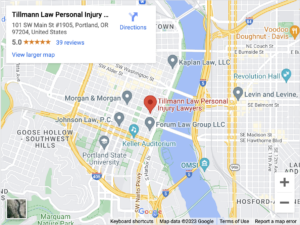
Please do not hesitate to visit our Portland, OR law office for a free and confidential conversation with one of our brain injury attorneys.
Client Review:
“Hi Aaron and Jason….just letting you know that I received my check today and deposited it……thank you again for all your help….have been busy for days with my grandsons but will get to my review of your fabulous law firm tomorrow!….will also stop by one day in the Spring or Summer with a thank you basket of Astoria’s finest goodies!….thank you again, dear friends!… Sincerely,…Me!….Mary!” -Mary
Visit Our Personal Injury Law Office in Portland, OR
injury, accident, brain, law, attention, skull, lawyer, pedestrian, premises liability, therapy, unconsciousness, assault, dog bite, death, pain and suffering, wrongful death claim, personal injury, amnesia, slip and fall, physical therapy, negligence, duty of care, punitive damages, consciousness, property damage, suffering, coma, bleeding, evidence, patient, statute, statute of limitations, disease, construction, product liability, physician, stress, defendant, human brain, bruise, surveillance, medication, mood, emergency department, hypoxia, risk, motor vehicle, blunt trauma, speech, tissue, verdict, evaluation, nursing home, employment, nursing, drunk driving accidents, attorneys, injury case, car accident, personal injury claim, nyc personal injury, injury claim, nerve, ear, edema, fault, axon, neuroimaging, settlement, causation, communication, burn, witness, hematoma, duty, violence, intracranial hemorrhage, distracted driving, hit and run, weakness, financial compensation, legal advice, distress, safety, tort, mental distress, traffic, sleep, tomography, neuropsychology, medical device, understanding, testimony, subdural hematoma, epidural hematoma, court, problem solving, standard of care, quality of life, sidewalk, truck driver, force, hach, severe traumatic brain, subarachnoid hemorrhage, lawsuit, headache, drunk driving, vehicle, wage, loss of consortium, dizziness, nausea, fatigue, seizure, income, fee, emergency, confusion, plaintiff, sexual abuse, vomiting, property, head injury accident, justice, new york metropolitan area, expense, bicycle, penetrating trauma, pain, failure, comparative negligence, oxygen, health care, judge, class action, scaffolding, empathy, irritability, taste, motor skill, drug, organ, crime, recklessness, dementia, mass tort, accident new york, reason, texting while driving, personal injury case, injury law, trial, perception, frontal lobe, blood vessel, stairs
Frequently Asked Questions
Can I sue for a brain injury caused by someone elses negligence?
Yes, you can sue for a brain injury caused by someone else's negligence. Brain injury cases can be complex, so it's important to work with a specialized personal injury attorney who can help you secure the compensation you deserve.
How long do brain injury lawsuits typically take to resolve?
The duration of brain injury lawsuits can vary, typically ranging from 12 to 24 months, depending on the complexity of the case and the extent of the injuries.
What are the common types of brain injuries that lawyers handle?
The common types of brain injuries that lawyers handle include traumatic brain injuries, such as concussions, contusions, and diffuse axonal injuries, as well as acquired brain injuries caused by strokes, infections, or lack of oxygen.
Can I file a lawsuit for a brain injury that occurred at work?
If you have suffered a brain injury at work, you may be able to file a lawsuit to seek compensation. Tillmann Law specializes in representing clients with brain injuries and can provide legal guidance on your options.
How can a lawyer help me prove a brain injury claim?
A lawyer can help prove a brain injury claim by gathering medical evidence, documenting the impact on your life, and negotiating with insurance companies to ensure you receive fair compensation for your injuries and related expenses.
Can I recover lost wages from a brain injury claim?
Yes, you may be able to recover lost wages from a brain injury claim. Brain injuries can often result in significant time off work, and recovering lost income is a common component of personal injury compensation in such cases.
How long do I have to file a brain injury lawsuit?
The statute of limitations for filing a brain injury lawsuit in Portland is typically two years from the date of the injury. It's important to act quickly to protect your legal rights.
How do I find a reputable brain injury lawyer?
Finding a reputable brain injury lawyer involves researching law firms that specialize in personal injury cases, reading client reviews, and considering factors like experience, credentials, and success rates in securing compensation for brain injury victims.
What is the role of a brain injury attorney in a case?
The role of a brain injury attorney in a case is to provide specialized legal expertise in representing clients who have suffered brain injuries and help them secure the compensation they are entitled to.
How do brain injury attorneys prove negligence in a case?
Brain injury attorneys prove negligence by demonstrating the defendant's failure to exercise reasonable care, the direct link between that failure and the plaintiff's brain injury, and the resulting damages.
What is the average settlement for a brain injury lawsuit?
The average settlement for a brain injury lawsuit can vary widely, ranging from hundreds of thousands to millions of dollars, depending on the severity of the injury, lost wages, and long-term care needs.
What are the long-term effects of a severe brain injury?
The long-term effects of a severe brain injury can include cognitive, physical, and emotional difficulties, such as problems with memory, concentration, mobility, and mood changes, which can significantly impact a person's quality of life.
Can I file a claim for a brain injury from a car accident?
You can file a claim for a brain injury sustained in a car accident. Brain injury cases require specialized legal representation to ensure fair compensation for medical expenses, lost wages, and ongoing care.
Can a brain injury attorney assist with insurance claims?
Brain injury attorneys can assist with insurance claims by negotiating with insurers, ensuring clients receive fair compensation, and advocating for their rights throughout the claims process.
What are the effects of a mild traumatic brain injury?
The effects of a mild traumatic brain injury can include headaches, dizziness, memory problems, difficulty concentrating, and mood changes, which can significantly impact a person's daily life and recovery.
Can I file a claim for emotional distress after a brain injury?
Yes, you may be able to file a claim for emotional distress after a brain injury. Brain injuries can have significant psychological and emotional impacts, which may be recoverable as part of a personal injury claim.
How do I prove negligence in a brain injury case?
To prove negligence in a brain injury case, you must demonstrate that the defendant's actions or inactions directly led to the injury and that they failed to exercise reasonable care. This typically involves presenting evidence of the defendant's duty of care, breach of that duty, and the resulting harm.
Can a brain injury attorney help with medical malpractice claims?
A brain injury attorney can assist with medical malpractice claims, as they have expertise in handling cases involving negligence that resulted in brain injuries.
What evidence is needed for a brain injury claim?
The evidence needed for a brain injury claim typically includes medical records, diagnostic tests, witness statements, and documentation of the accident or incident that caused the injury.
How can I strengthen my brain injury case?
Strengthening your brain injury case involves gathering comprehensive medical records, documenting the impact on your life, and working with a specialized personal injury attorney experienced in handling brain injury claims.
What damages can I claim for brain injuries?
Individuals who have suffered brain injuries may be able to claim damages for medical expenses, lost wages, rehabilitation costs, and pain and suffering.
What should I expect during a brain injury lawsuit?
During a brain injury lawsuit, you can expect a thorough legal process to establish liability, assess damages, and secure fair compensation for your medical expenses, lost wages, and pain and suffering.
How do I choose the right brain injury attorney?
Choosing the right brain injury attorney involves considering their experience, track record of successful brain injury claims, and commitment to providing personalized attention and care for clients affected by this type of injury.
What are the steps in filing a brain injury lawsuit?
The steps in filing a brain injury lawsuit typically involve seeking medical attention, gathering evidence, identifying the liable party, and filing a personal injury claim with the guidance of a specialized brain injury attorney.
How can I prepare for my attorney consultation?
Preparing for your attorney consultation involves gathering relevant documents, making notes on your case details, and considering any questions you have. This can help ensure a productive and informative meeting.
What factors influence brain injury settlement amounts?
The factors that influence brain injury settlement amounts include the severity of the injury, long-term prognosis, medical expenses, lost wages, and the impact on the victim's quality of life.
What are common defenses in brain injury cases?
Common defenses in brain injury cases often involve challenging the causation, severity, or extent of the injury, as well as the plaintiff's role in the incident.
How do brain injury claims differ from other injuries?
Brain injury claims often involve more complex medical evidence and long-term care needs, requiring specialized legal expertise to secure adequate compensation for the victim's lifelong challenges.
What role does medical documentation play in claims?
Medical documentation plays a crucial role in personal injury claims, as it provides evidence of the nature and extent of the brain injury, supporting the client's case for compensation.
How can I appeal a denied brain injury claim?
Appealing a denied brain injury claim involves gathering additional medical evidence, filing an appeal with the appropriate authority, and potentially seeking legal representation to strengthen your case and increase the chances of a successful outcome.
injury, accident, brain, law, attention, skull, lawyer, pedestrian, premises liability, therapy, unconsciousness, assault, dog bite, death, pain and suffering, wrongful death claim, personal injury, amnesia, slip and fall, physical therapy, negligence, duty of care, punitive damages, consciousness, property damage, suffering, coma, bleeding, evidence, patient, statute, statute of limitations, disease, construction, product liability, physician, stress, defendant, human brain, bruise, surveillance, medication, mood, emergency department, hypoxia, risk, motor vehicle, blunt trauma, speech, tissue, verdict, evaluation, nursing home, employment, nursing, drunk driving accidents, attorneys, injury case, car accident, personal injury claim, nyc personal injury, injury claim, nerve, ear, edema, fault, axon, neuroimaging, settlement, causation, communication, burn, witness, hematoma, duty, violence, intracranial hemorrhage, distracted driving, hit and run, weakness, financial compensation, legal advice, distress, safety, tort, mental distress, traffic, sleep, tomography, neuropsychology, medical device, understanding, testimony, subdural hematoma, epidural hematoma, court, problem solving, standard of care, quality of life, sidewalk, truck driver, force, hach, severe traumatic brain, subarachnoid hemorrhage, lawsuit, headache, drunk driving, vehicle, wage, loss of consortium, dizziness, nausea, fatigue, seizure, income, fee, emergency, confusion, plaintiff, sexual abuse, vomiting, property, head injury accident, justice, new york metropolitan area, expense, bicycle, penetrating trauma, pain, failure, comparative negligence, oxygen, health care, judge, class action, scaffolding, empathy, irritability, taste, motor skill, drug, organ, crime, recklessness, dementia, mass tort, accident new york, reason, texting while driving, personal injury case, injury law, trial, perception, frontal lobe, blood vessel, stairs
Frequently Asked Questions
Can I sue for a brain injury caused by someone elses negligence?
Yes, you can sue for a brain injury caused by someone else's negligence. Brain injury cases can be complex, so it's important to work with a specialized personal injury attorney who can help you secure the compensation you deserve.
How long do brain injury lawsuits typically take to resolve?
The duration of brain injury lawsuits can vary, typically ranging from 12 to 24 months, depending on the complexity of the case and the extent of the injuries.
What are the common types of brain injuries that lawyers handle?
The common types of brain injuries that lawyers handle include traumatic brain injuries, such as concussions, contusions, and diffuse axonal injuries, as well as acquired brain injuries caused by strokes, infections, or lack of oxygen.
Can I file a lawsuit for a brain injury that occurred at work?
If you have suffered a brain injury at work, you may be able to file a lawsuit to seek compensation. Tillmann Law specializes in representing clients with brain injuries and can provide legal guidance on your options.
How can a lawyer help me prove a brain injury claim?
A lawyer can help prove a brain injury claim by gathering medical evidence, documenting the impact on your life, and negotiating with insurance companies to ensure you receive fair compensation for your injuries and related expenses.
Can I recover lost wages from a brain injury claim?
Yes, you may be able to recover lost wages from a brain injury claim. Brain injuries can often result in significant time off work, and recovering lost income is a common component of personal injury compensation in such cases.
How long do I have to file a brain injury lawsuit?
The statute of limitations for filing a brain injury lawsuit in Portland is typically two years from the date of the injury. It's important to act quickly to protect your legal rights.
How do I find a reputable brain injury lawyer?
Finding a reputable brain injury lawyer involves researching law firms that specialize in personal injury cases, reading client reviews, and considering factors like experience, credentials, and success rates in securing compensation for brain injury victims.
What is the role of a brain injury attorney in a case?
The role of a brain injury attorney in a case is to provide specialized legal expertise in representing clients who have suffered brain injuries and help them secure the compensation they are entitled to.
How do brain injury attorneys prove negligence in a case?
Brain injury attorneys prove negligence by demonstrating the defendant's failure to exercise reasonable care, the direct link between that failure and the plaintiff's brain injury, and the resulting damages.
What is the average settlement for a brain injury lawsuit?
The average settlement for a brain injury lawsuit can vary widely, ranging from hundreds of thousands to millions of dollars, depending on the severity of the injury, lost wages, and long-term care needs.
What are the long-term effects of a severe brain injury?
The long-term effects of a severe brain injury can include cognitive, physical, and emotional difficulties, such as problems with memory, concentration, mobility, and mood changes, which can significantly impact a person's quality of life.
Can I file a claim for a brain injury from a car accident?
You can file a claim for a brain injury sustained in a car accident. Brain injury cases require specialized legal representation to ensure fair compensation for medical expenses, lost wages, and ongoing care.
Can a brain injury attorney assist with insurance claims?
Brain injury attorneys can assist with insurance claims by negotiating with insurers, ensuring clients receive fair compensation, and advocating for their rights throughout the claims process.
What are the effects of a mild traumatic brain injury?
The effects of a mild traumatic brain injury can include headaches, dizziness, memory problems, difficulty concentrating, and mood changes, which can significantly impact a person's daily life and recovery.
Can I file a claim for emotional distress after a brain injury?
Yes, you may be able to file a claim for emotional distress after a brain injury. Brain injuries can have significant psychological and emotional impacts, which may be recoverable as part of a personal injury claim.
How do I prove negligence in a brain injury case?
To prove negligence in a brain injury case, you must demonstrate that the defendant's actions or inactions directly led to the injury and that they failed to exercise reasonable care. This typically involves presenting evidence of the defendant's duty of care, breach of that duty, and the resulting harm.
Can a brain injury attorney help with medical malpractice claims?
A brain injury attorney can assist with medical malpractice claims, as they have expertise in handling cases involving negligence that resulted in brain injuries.
What evidence is needed for a brain injury claim?
The evidence needed for a brain injury claim typically includes medical records, diagnostic tests, witness statements, and documentation of the accident or incident that caused the injury.
How can I strengthen my brain injury case?
Strengthening your brain injury case involves gathering comprehensive medical records, documenting the impact on your life, and working with a specialized personal injury attorney experienced in handling brain injury claims.
What damages can I claim for brain injuries?
Individuals who have suffered brain injuries may be able to claim damages for medical expenses, lost wages, rehabilitation costs, and pain and suffering.
What should I expect during a brain injury lawsuit?
During a brain injury lawsuit, you can expect a thorough legal process to establish liability, assess damages, and secure fair compensation for your medical expenses, lost wages, and pain and suffering.
How do I choose the right brain injury attorney?
Choosing the right brain injury attorney involves considering their experience, track record of successful brain injury claims, and commitment to providing personalized attention and care for clients affected by this type of injury.
What are the steps in filing a brain injury lawsuit?
The steps in filing a brain injury lawsuit typically involve seeking medical attention, gathering evidence, identifying the liable party, and filing a personal injury claim with the guidance of a specialized brain injury attorney.
How can I prepare for my attorney consultation?
Preparing for your attorney consultation involves gathering relevant documents, making notes on your case details, and considering any questions you have. This can help ensure a productive and informative meeting.
What factors influence brain injury settlement amounts?
The factors that influence brain injury settlement amounts include the severity of the injury, long-term prognosis, medical expenses, lost wages, and the impact on the victim's quality of life.
What are common defenses in brain injury cases?
Common defenses in brain injury cases often involve challenging the causation, severity, or extent of the injury, as well as the plaintiff's role in the incident.
How do brain injury claims differ from other injuries?
Brain injury claims often involve more complex medical evidence and long-term care needs, requiring specialized legal expertise to secure adequate compensation for the victim's lifelong challenges.
What role does medical documentation play in claims?
Medical documentation plays a crucial role in personal injury claims, as it provides evidence of the nature and extent of the brain injury, supporting the client's case for compensation.
How can I appeal a denied brain injury claim?
Appealing a denied brain injury claim involves gathering additional medical evidence, filing an appeal with the appropriate authority, and potentially seeking legal representation to strengthen your case and increase the chances of a successful outcome.